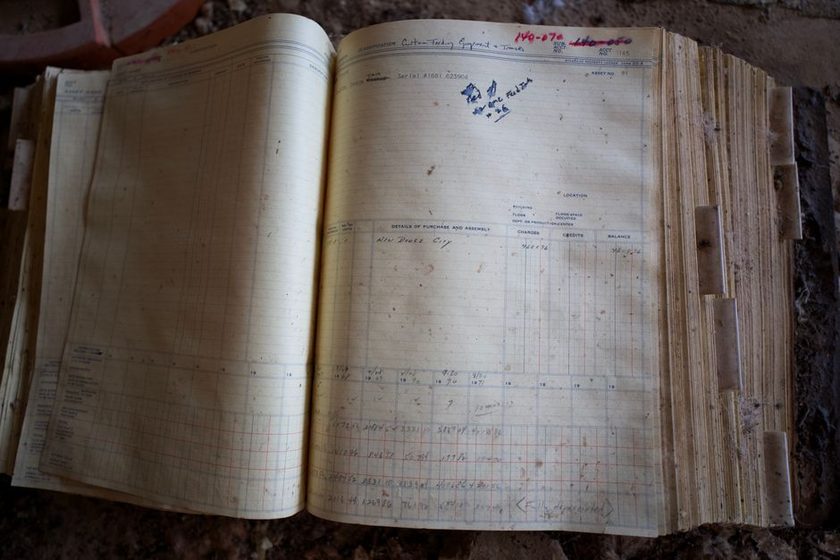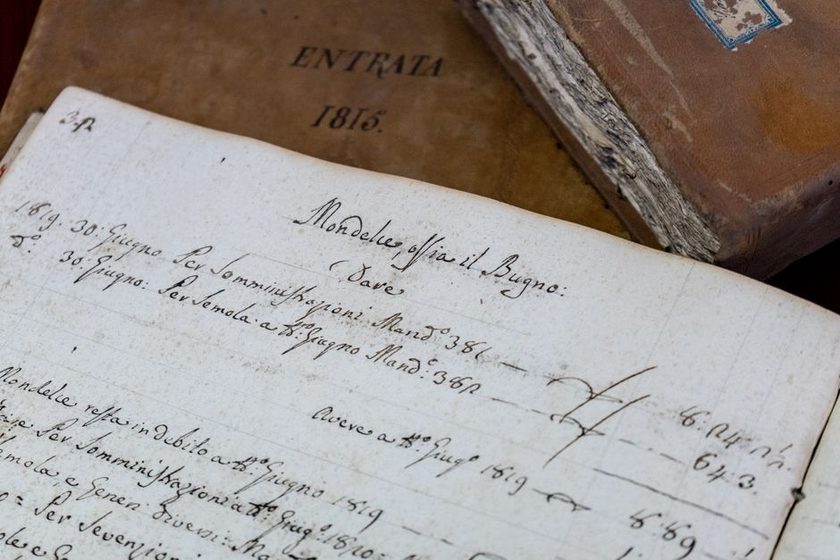
Open a spiral notebook bought for tracking a household budget and the ruled lines look almost incidental — a pale guide for the eye, maybe a narrower column running down the right-hand edge. Nobody in the stationery aisle chose that layout on purpose. It was set generations ago, in rooms that smelled of tallow candles and wet ink, by clerks who ruled every sheet by hand before they wrote a single figure on it. The habits outlasted the room. They outlasted the quill, the fountain pen, and the ballpoint after it. A ledger kept today on a kitchen table still carries the fingerprints of a countinghouse that closed its doors long before anyone alive could have walked through them.
Merchants Kept the Books Before Anyone Printed the Lines
The earliest surviving merchant account books, kept in port cities like Genoa and Florence, were ruled fresh for every page. A clerk drew each line with a straightedge and a plumb cord before a single entry went down, because paper came from a mill with no lines on it at all. Ruling a page well — even margins, consistent spacing, a column wide enough for a description and narrow enough not to waste the sheet — was often an apprentice's first job, done long before he was trusted to enter a transaction. A crooked line meant a crooked column of figures underneath it, and a crooked column was harder to check.
Two Columns Because One Column Hides Mistakes
The habit that mattered most wasn't the line itself but what it made possible: a second column standing next to the first one. A single list of numbers, added top to bottom, tells you a total but not whether that total is right. Put a running balance beside it — a figure updated after every entry — and the two columns start checking each other. If a second column catches what a first one misses, it's because a transposed digit or a skipped line usually breaks the relationship between the two before it breaks anything else. Double-entry bookkeeping, formalized by Italian merchants and later written up by Luca Pacioli in 1494, pushed this further: every transaction touched two accounts, so the books balanced by construction, not by hope.
The Countinghouse Clerk and the Rule of the Red Line
At the close of a period, a clerk would total a column, then draw a firm line under it — often two lines, occasionally in red ink to mark that the account was settled and closed. This practice, known in old manuals as "ruling off," is the likely ancestor of a phrase still used to mean a final result. It's a small piece of office folklore that language historians have connected to this habit, though the exact path a phrase takes into everyday speech is rarely tidy.
"An account not ruled off is an account not yet finished, however correct the figures in it may be." — from a 19th-century bookkeeping manual, on the habit of closing a page before starting the next
The rule wasn't decorative. A closed account told the next clerk, or the next owner of the book, exactly where one period ended and another began. Without it, a ledger was just a running scrawl with no place to stand and check the work.
Printers Standardize What Clerks Used to Draw by Hand
By the nineteenth century, paper mills and printers took over the ruling work entirely, and column patterns that had varied from countinghouse to countinghouse settled into a handful of standard forms sold by the ream. A cash book got one pattern, a factory cost ledger got another with room for more categories, and a simple household account book got something closer to what still ships in a stationery aisle today.
| Ruled Pattern | Rough Era | What It Was For | Echo in a Notebook Today |
|---|---|---|---|
| Single feint rule | Hand-ruled, pre-1800 | A plain running list of entries | Any lined page |
| Cash column ruling | Early 1800s | Description plus one amount column | A simple spend log |
| Debit & credit ruling | Mid 1800s | Paired columns per double-entry method | Entry & running-balance columns |
| Analysis (multi-column) paper | Late 1800s | Splitting spending by category, side by side | Category headings across a household page |
| Faint blue rule, red margin | Early 1900s, mass-printed | Office and school stationery standard | The everyday ruled notebook page |
What a Modern Notebook Still Borrows
None of this survived because anyone signed a standard into law. It survived because it kept working. A household ledger doesn't need debit-and-credit ruling to borrow the countinghouse's real lesson: close the period, don't let it run on indefinitely. That's most of what closing the month in twenty minutes actually is — a small, modern version of ruling off, done on a schedule short enough that it never turns into a weekend project.
Next time you open a printed notebook, look for the narrow margin column running down one side. It's usually a leftover of the old cash-column ruling — originally meant for a running total, now often used for a date or a note instead.
Reading the Lines Today
A few conventions from that older ruling still show up, quietly, on an ordinary page:
- A wide left column for description, a narrower one on the right for a number — the basic cash-column shape.
- A line drawn under a total before starting a new section, rather than letting entries run together.
- A margin set aside for a note or a date, separate from the figures themselves.
- Category headings placed across the top of the page rather than buried inside each entry.
None of it requires knowing where it came from. A page rules itself the same way whether or not the person filling it in has ever heard of Pacioli or a countinghouse clerk. But knowing the history changes how the page reads: the line isn't decoration, and the second column isn't redundant. Both were built, slowly, to catch a mistake before it became a habit.
This piece is a history note, not a bookkeeping guide. It describes where ruled ledger conventions came from; it isn't instruction on how to set up your own accounts, and it isn't a recommendation for any particular method or product.