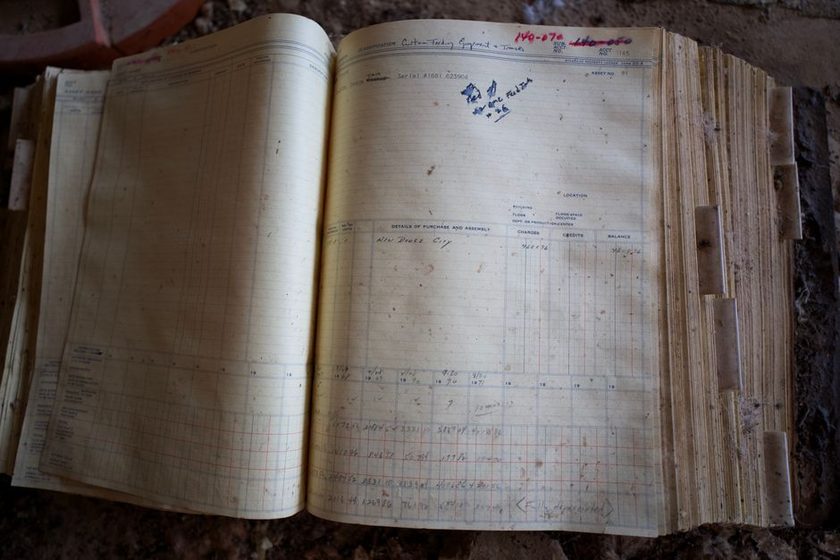
Pull a ledger down from a shelf two years after you closed it and read it the way a stranger would — no memory of the month to fill in the gaps, no idea what "J. — half" meant when you wrote it on a Tuesday in a hurry. Some pages open right up. The dates are unambiguous, the categories still read as words rather than habits, and a total sits at the bottom that matches what the top of the next page says it should be. Other pages go quiet the moment you look at them: a column of shorthand that made complete sense at the time and means nothing now. The difference between those two kinds of page isn't luck, and it isn't handwriting quality. It's whether the entry was written for the moment it described or for the book itself — and a ledger only earns the name if most of its pages were written for the book.
What Makes an Entry Legible Two Years Later
A legible old entry has three things a cryptic one usually lacks: a full date, a description that names the thing rather than gesturing at it, and a number that sits inside a column doing visible work. "3/14 — Hardware store, gutter repair, $38" tells its whole story on its own. "3/14 — misc, $38" tells you a number happened and asks you to remember why, which is exactly the request a two-year gap can't fulfill. The gap between those two lines looks small on the page — four or five extra words — but it's the entire difference between a record and a placeholder that used to have meaning attached to it.
The pattern holds at the level of a whole page, too. A page that still reads well tends to have been written slowly enough to spell things out; a page that's gone opaque was usually written in a rush, at the end of a long day, with the writer trusting a future memory that the future didn't keep its end of.
The Abbreviations That Only Made Sense at the Time
Every household ledger develops its own private shorthand eventually, and most of it is harmless — a consistent abbreviation for a store you visit weekly reads fine two years later precisely because it's consistent. The trouble comes from the one-off abbreviations, invented under a specific mood and never repeated: an initial standing in for a person's full name when there were three people that month whose names started with the same letter, a checkmark meant to indicate "already accounted for" with no note of accounted for how, a circled number with no explanation of what made it unusual enough to circle. These entries weren't written carelessly. They were written by someone who, in the moment, was certain they'd remember. The abbreviation wasn't a mistake; it was a bet against forgetting, and it's a bet that a ledger, structurally, is not supposed to make.
A Page Read Cold
The table below sets the same handful of entry elements side by side — the version that still explains itself after two years, and the version that has quietly turned into a private code. None of the individual differences look dramatic. Together, they decide whether a page is readable or merely present on the shelf.
| Element | Still legible after two years | Reads as a private code |
|---|---|---|
| Date | Full month, day, and year at the top of the page | Just "the 14th," with the month assumed |
| Description | Names the store or the person in full | An initial or a single word standing in for the whole story |
| Category | Spelled out at least once per page | A checkmark or symbol with no key explaining it |
| Odd amount | A short margin note on why the figure is unusual | A circled number with nothing written beside it |
| Running balance | Written at the bottom of every page in the sequence | Left blank, calculated once and never recorded |
"A closed ledger is not a private diary. It is a document written for someone who no longer remembers the day it describes — and that someone is you, two years from now."
Why the Second Column Still Matters When You're Reading Cold
This is where the double-column habit earns its keep long after the month has closed. A single running total, the kind most spreadsheet apps show by default, collapses a month into one number and hides the individual movements that produced it — useful in the moment, close to useless when you're trying to reconstruct what happened without memory to lean on. A page kept in two columns, income on one side and expense on the other, lets you re-add either column on its own two years later and get an answer that either matches the total written at the bottom or doesn't. An app's export gives you the final figure and asks you to trust it. A ledger kept in columns gives you the arithmetic itself, still sitting there, still checkable, exactly as it was the day it was written.
The same is true of categories. A page where every category was named the same way it will still make sense in December lets you sort the month by eye even cold. A page where the category was implied by which side of a mental line an entry fell on doesn't survive the trip.
Reading Old Pages to Write Better New Ones
The most useful thing about going back through an old ledger isn't nostalgia. It's diagnostic. A stack of pages that still read clearly two years on tends to share a small set of habits, and a stack that doesn't tends to share the opposite ones:
- Write the full date every time, not just when the month or year might otherwise be ambiguous.
- Spell a category out in full at least once per page, even if a shorthand is used for the rest of it.
- When an amount looks unusual to you in the moment, assume it will look stranger in two years and write one line about why.
- Retire an abbreviation the day it stops being obvious, rather than trusting it to stay obvious forever.
- Total and carry the balance at the close of every month, so a reader never has to trust an unverified running number.
None of this takes noticeably longer to write in the moment. It takes exactly as long as writing the vague version — the cost isn't paid at the desk today, it's paid, with interest, by whoever opens the book two years from now.
This piece describes personal habits for reading and writing handwritten household records, for general interest. It is not financial, tax, or accounting advice, and nothing here recommends how any specific household should keep or review its own ledger.